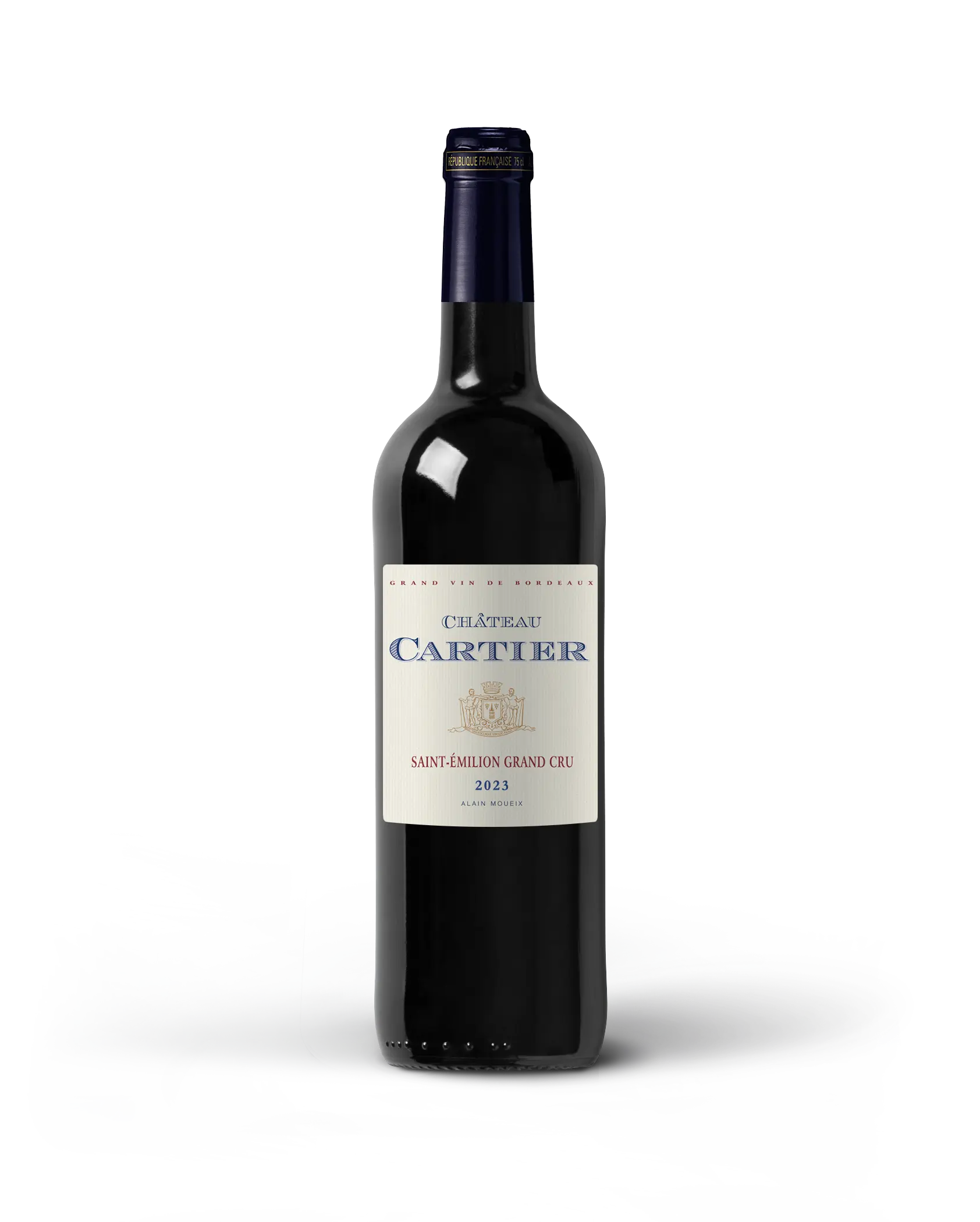

Château Cartier
Second wine of the estate

Château Cartier

Château Cartier only seems to be a "second wine" in name. The choice of placing "Château" before "Cartier" is no coincidence. While its aging potential is shorter than that of Fonroque, it is renowned for being rounder and suppler, while firmly retaining its own identity. A second wine with the demeanor of a first growth.

Discover the estate's wines available for order.
VISIT THE SHOP

What are the characteristics of Château Fonroque wines?

The wines of Château Fonroque, a Saint-Émilion Grand Cru Classé, express the richness of a clay-limestone terroir and more than twenty years of commitment to biodynamics. Merlot brings roundness, depth, and elegance, while Cabernet Franc contributes freshness, finesse, and aromatic complexity. Château Fonroque cuvées stand out for their finesse, freshness, and aging potential, positioning them among the benchmarks of Saint-Émilion Grand Cru Classé.

How to taste a Saint-Émilion Grand Cru Classé?

Tasting a Saint-Émilion Grand Cru Classé is an experience that allows you to appreciate the full richness of a great Bordeaux wine and discover the influence of the terroir on its expression.
To fully enjoy a wine from Château Fonroque, it is recommended to serve it between 16 and 18°C in an appropriate glass that enhances aromatic expression. Depending on the vintage, gentle aeration can allow the wine to reveal its full complexity. A tasting at Château Fonroque also offers the opportunity to understand how biodynamics and the clay-limestone terroirs contribute to the uniqueness of each vintage.

Which dishes pair best with a Saint-Emilion Grand Cru Classé?

Château Fonroque wines pair perfectly with red meats, roast poultry, game, mushrooms, and aged cheeses. A young vintage goes ideally with a rib steak, duck breast, or grilled meats that highlight the freshness of the fruit. Older vintages reveal their full complexity with refined dishes such as roast pigeon, porcini mushrooms, truffles, or milk-fed lamb.

How long can a Château Fonroque wine be aged?

Château Fonroque wines possess an excellent aging potential thanks to the quality of their terroir. The wines can be enjoyed in their youth for their freshness and fruity expression; however, many vintages develop their full complexity after several years of bottle aging in the cellar.
Depending on storage conditions and the vintage, certain Château Fonroque wines can continue to evolve favorably for fifteen, twenty years, or even longer. This aging capacity is one of the signature traits of the great terroirs of Saint-Émilion Grand Cru Classé.

What is biodynamics at Château Fonroque?

Château Fonroque is among the pioneers of biodynamics in Saint-Émilion. This approach stems from a profound commitment to preserving soil vitality, fostering biodiversity, and producing wines that faithfully reflect their terroir. At Château Fonroque, biodynamics helps strengthen the vines' resilience and encourages a better expression of the clay-limestone terroirs of Saint-Émilion.
Today, this philosophy lies at the heart of the estate's project and is an essential element of the experience offered during vineyard tours and tastings.

What is the difference between organic and biodynamic wine?

Organic agriculture and biodynamics share a common goal: cultivating the vine with respect for the environment and living ecosystems. However, biodynamics goes further by adopting a holistic approach to the vineyard: in a biodynamic vineyard like Château Fonroque, special attention is paid to soil life, biodiversity, cover crops, and the interactions between the various elements of the ecosystem. Natural preparations are used to support the vitality of the soils and the vines.

Welcome to the Château Fonroque website
Are you of legal drinking age?
To visit our website, you must be of legal drinking age in your country of residence, in accordance with applicable laws.
I am not of legal age